Contents
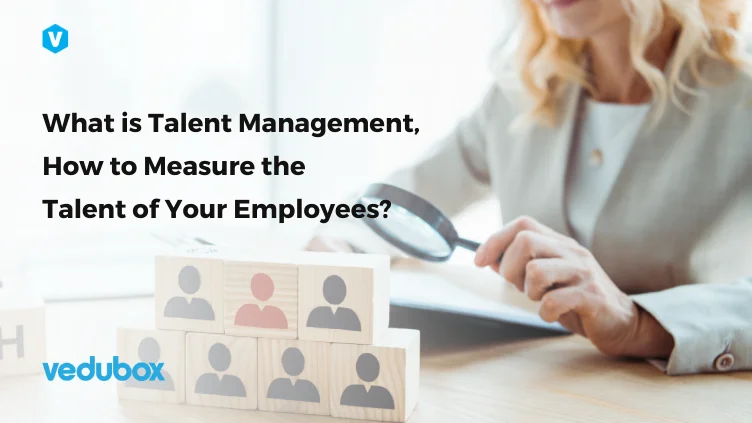
One of the keys to success in today’s companies is the correct management of employee talent. Human resources departments play a critical role in the employee talent management process. Talent management is the human resources process that creates and implements strategies to help employees discover and develop their talents and use them in line with company goals. This approach, which enables companies to achieve their goals and increase business value through strategic human resources planning, covers all processes from recruitment to employee development, from rewards to strategic workforce planning, and from leaving the job.
Successful talent management is directly related to investments in employee training. The way to carry out this process successfully and sustainably is to integrate modern training management system solutions, such as online training, into human resources policies.
The Importance of Talent Management for Employees
The success of a company is closely related not only to the products or services it offers, but also to the competence levels of its employees. Employees feel more valued when they have the opportunity to develop within their companies and gain sufficient knowledge about their jobs. This increases the likelihood that they will speak favorably about the company they work for and convey accurate information. Thus, the company’s brand reputation is also strengthened. In this process, human resources departments play an essential role in developing plans aligned with employees’ career goals and identifying their training needs. In addition, talent management plays a key role in supporting employees’ continuous development by recognizing their potential.
Especially today, when competition is intense, providing employees with training opportunities to improve themselves is one of the cornerstones of a company’s long-term success. At this point, online training platforms come to the fore.
Talent Management Process Stages
1. Determination of Talent Needs:
Human resources is to analyse which competencies are needed to support the company’s strategic goals and to determine the competency requirements necessary to achieve these goals by evaluating the existing workforce. At this stage, workforce planning can be undertaken, and employee needs anticipated.
- The organization’s talent needs are determined through strategic planning.
- Analyses are conducted of competencies and skills aligned with the company’s vision.
- Differences between the current workforce and these targets are determined.
2. Talent Acquisition (Recruitment)
At this stage, it is necessary to identify highly competent candidates who align with the organization’s culture and manage the recruitment process effectively. Well-managed recruitment enables the organization to acquire the right talent and build a strong workforce to achieve long-term goals. At this stage:
- Job advertisements are prepared and announced, and a talent pool is created through the proper channels.
- Selection and placement processes are managed, and suitable candidates are placed in the correct positions.

3. Talent Development
- Employee training programmes are organized for positions to improve employees’ existing skills, eliminate deficiencies, and ensure they gain qualifications aligned with the company’s needs.
- Employee skills are kept up to date through tools such as online training and digital learning platforms. Thanks to the personalized learning services offered by LMS/LXPs, each employee can continue their online training in line with their own potential and needs.
4. Performance Management and Measurement
- Employee performance can be improved by supporting employee training.
- Employee performance is regularly evaluated: their progress and areas of need are identified. According to this analysis, strategies are determined to make the necessary improvements.
- In performance measurement, employees’ learning processes can be analysed, and their efficiency evaluated using the advanced reporting tools offered by LMSs.
5. Career Planning and Development
- Career paths are created in line with employees’ qualifications and goals.
- Development opportunities such as promotion, mentoring, rotation, and project-based work are offered to help employees realize their potential. Such opportunities are an essential step for employees to showcase and develop their talents.
6. Loyalty and Motivation Management
Various programmes are implemented to increase employees’ motivation and loyalty to the company. Employee satisfaction is ensured through appreciation, rewards, and feedback processes. In addition, effective employee training programmes help employees feel valued and increase their commitment to the company. The success of talent management is directly related to employee engagement. Employee engagement has a significant impact on performance, productivity, profitability, and overall job satisfaction. Engaged employees focus more on their work and take essential steps by contributing to the success of the company.
7. Process Evaluation and Improvement
Talent management processes are regularly analysed to cover all steps from recruitment to termination. These analyses provide opportunities to evaluate the effectiveness of recruitment strategies, identify mistakes in employee training processes, examine employee development processes, assess performance management, and understand reasons for leaving the job. A detailed review of the processes enables both improving current practices and developing more efficient strategies in the future.
Improve Employee Skills with Online Training
Employee training processes can be carried out more flexibly thanks to online platforms. Online training platforms and training management system solutions allow human resources departments to manage employee development processes more effectively. Online training and eLearning solutions enable employees to learn anytime, anywhere. In this way, employees improve their skills and increase the company’s productivity by receiving online training in the areas they need.
Thanks to online training platforms such as LMSs and LXP, training processes can be efficiently planned, monitored, and evaluated. While these systems make employee training more effective, they also strengthen the company’s talent management strategies.
Measuring and Reporting Employee Skills
One of the most critical steps in talent management is accurately measuring employee skills and analysing development processes in detail. This process involves not only identifying existing talent but also identifying areas for improvement by measuring training efficiency.
The reporting systems offered by online training platforms make it easier to achieve corporate goals while evaluating employee performance. For example, data such as training modules completed by employees, exam results, and interaction rates can be viewed on a single platform.
This system enables companies to maximize their employees’ potential by making the talent management process more transparent and efficient.
Build an Effective Talent Management Strategy with Vedubox
Vedubox is a comprehensive AI-powered Super App that makes online training processes and training management system functions more efficient and effective. By meeting employee training needs on a single platform, it supports the processes of discovering, developing, and directing their talents in line with company goals. The right employee training strategy not only supports the development of the existing workforce but also facilitates the recruitment of new talent.
Thanks to this platform:
- Employees can easily access online training whenever and wherever they want to gain the competencies they need, thus contributing to their individual development.
- The efficiency of training is measured with detailed reporting tools to identify areas for improvement and ensure continuous development.
- Processes planned through Learning Management Systems (LMS) facilitate strategic human resources planning by saving time for both employees and managers.
Vedubox supports companies’ talent management strategies aligned with human resources policies, maximizing employee potential and providing a robust infrastructure to increase business value.
Bring all your training together on one platform.
Manage your training, exams and reporting from a single place with Vedubox.
Request a Demo

.svg)