




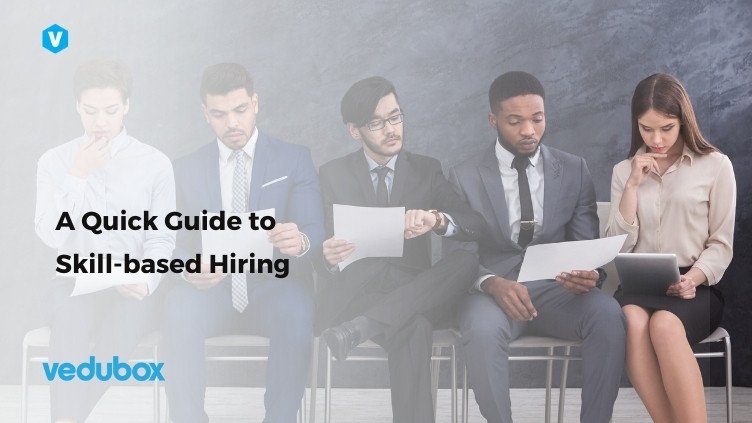
For generations, proudly listing degrees and job titles on CVs stood as the gatekeeper to opportunity. It was the gold standard, especially for white-collar roles. But now, that familiar document is quietly fading from the spotlight.
Major employers — names like PwC and Rolls-Royce — are rethinking what matters most. Degree requirements are vanishing from job ads for crucial roles. It is not a passing trend, but a fundamental change in how businesses across the UK search for talent and build their teams.
A skills-first approach is taking over. What you can do — what you’ve proven, not just what you’ve studied — now matters more than a neat row of certificates or a tidy work history.
For those leading L&D, this is a once-in-a-generation opening. It’s a chance to move beyond being a provider of courses and become the architect of your organization’s future. The pace at which you adapt could shape the very survival of your business.
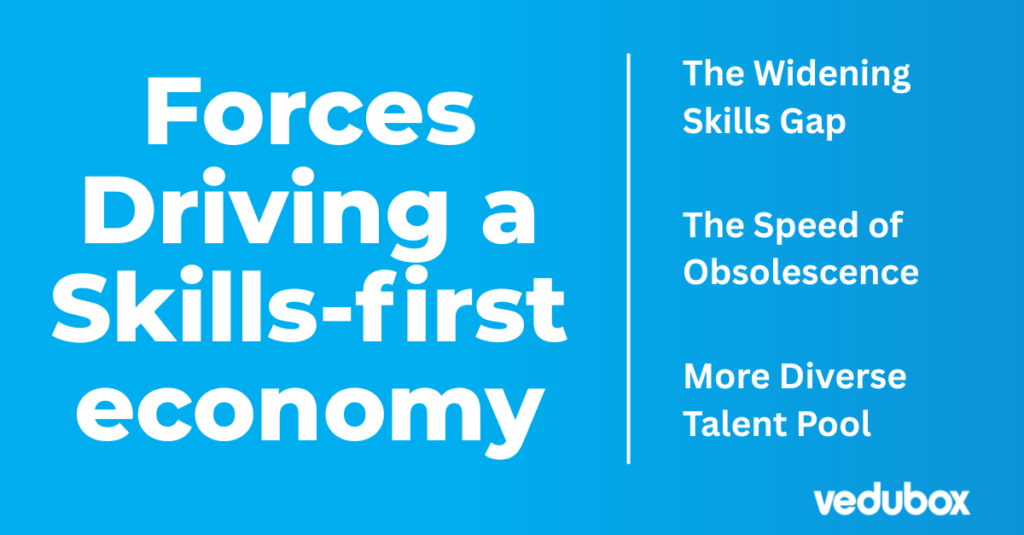
The Forces Driving a Skills-first Economy
The move toward skills-first hiring was popularized by the US tech industry, and several businesses operating in the world’s largest economies have been adopting it.
The Widening Skills Gap
The most urgent challenge is the widening skills gap. Reports from the British Chambers of Commerce point to shortages in digital literacy, data science, and green energy — fields that power the nation’s productivity. The old method of waiting for the perfect candidate with the perfect degree is falling short. The labor market simply can’t keep pace.
The Speed of Obsolescence
A degree earned five years ago no longer guarantees you’re ready for what’s next. AI and automation are sweeping away some jobs and creating new ones that demand fresh, specialised skills. The world is moving too fast for static qualifications. Now, continuous learning ability has become the most valuable skill of all.
The Push for a More Diverse Talent Pool
When companies fixate on qualifications, they overlook talented people who took different paths into work. A skills-based approach opens the door to a wider range of backgrounds, boosting contemporary priorities, such as social mobility and inclusion. By looking at what someone can actually do, not just where they studied, companies tap into hidden reserves of potential.
From Course Catalogue to Skills Engine
In a skills-first world, L&D is no longer just a support function. It becomes the engine that drives talent and keeps the business resilient. This calls for a new way of working.
Shift 1: From Reactive Training to Proactive Skills Forecasting
In the past, L&D waited for training requests to land on their desk. Now, the job is to work side by side with leaders and HR, mapping out the skills the business will need in the years ahead. The goal: spot gaps before they become problems.
Shift 2: From External Hiring to Internal Mobility
Chasing scarce talent outside the business is costly and slow. It’s faster, more affordable, and better for morale to reskill people who already know your culture. L&D’s new mission is to create clear paths for employees to move into roles where their skills are needed most.
Shift 3: From Tracking Completion to Verifying Competency
A skills-based world gives internal training a new weight and value, because proof matters. Tracking who finished a course is not enough. L&D needs solid ways to measure and recognize the real skills people gain.
3-step Framework to Build a Skills-based L&D Strategy
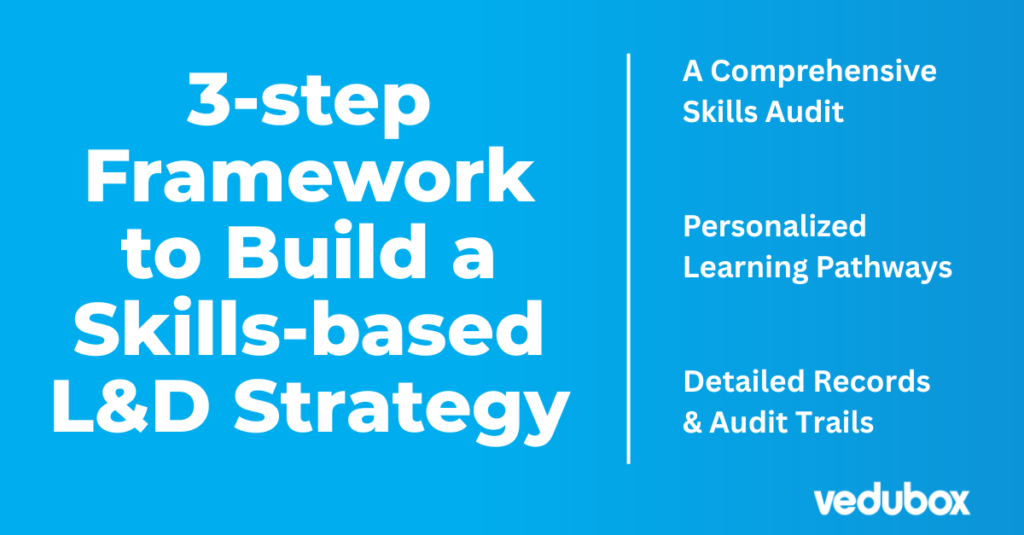
Shifting to a skills-first model takes careful planning and real commitment from leaders at every level.
Step 1: Conduct a Comprehensive Skills Audit
To identify gaps and focus your efforts, you need a clear picture. The first step is to set aside assumptions and take a close look at the skills your people already have. Map these against the skills you’ll need to reach your goals.
Step 2: Develop Personalized Learning Pathways
Creating learning journeys tailored to each role works much better than the old-fashioned one-size-fits-all approach. These pathways help employees grow from where they are now to where they need to be for their next step. It’s a smarter use of your training budget.
Step 3: Credential Everything
When someone works hard to learn a new skill, it should count for something. Use real assessments, projects, and recognized certificates to build a record of what people can do. This ‘skills passport’ helps managers make better decisions about projects, promotions, and moving people into new roles.
Vedubox: The Technology Backbone for Your Skills-based Strategy
Rolling out a skills-based approach across a whole organization needs the right technology. You need a single place to map, manage, and measure skill development. We built Vedubox to be that central hub for your learning journey.
LMS with Structured Learning Paths
With Vedubox, you move beyond a basic list of courses. The platform lets you build custom learning paths that match the skills your audit uncovered. From compliance to advanced AI, the right training reaches the right people at the right time.
Integrated Assessments & Certification
To prove skills, you need strong assessment tools. Vedubox’s online exam system lets you set up quizzes, real-world scenarios, and timed tests to measure what people can actually do. When someone passes, they get a digital certificate — clear proof for their skills passport.
Advanced Analytics & Reporting
L&D needs to show its value. Vedubox gives you real-time dashboards to track how skills are growing and being used across the business. You can show leaders exactly how L&D is closing gaps, helping people move up, and building a stronger workforce.
Your Best Talent is Already on Your Payroll
Skills-based hiring is the chance the L&D leaders have been waiting for. It brings them out of the background and into the heart of the business, ready to tackle the biggest talent challenges facing companies.
The organizations that weather change best are those that invest in building skills from within. By choosing a skills-based approach, you’re creating the talent your business needs to succeed.
Request a demo to discover how Vedubox can help you map, measure, and build the workforce of the future.