








Disengagement at the workplace is a global obstacle that cost approximately $440 billion in 2024, according to Gallup.
To counter what some call the ‘Great Detachment,’ weaving a sense of friendly competition into corporate training could make a real difference.
Gamification isn’t about trying to turn training into Candy Crush, but the strategic application of proven game mechanics (points, badges, leaderboards). Behavioral psychology supports the idea that making learning habitual, measurable, and genuinely enjoyable drives positive business outcomes.
What Is Gamification in Learning?
To eliminate any obscurities, let’s clarify one thing. We are discussing gamification, not game-based learning. Gamification is the process of adding game elements to non-game activities, while game-based learning involves using actual games or simulations as primary tools.
You will get tips on using smart gamification features in an LMS to transform tedious modules into compelling experiences.
Why We Love to Win
If you’ve ever wondered why a digital badge can motivate more than a congratulatory email, the answer lies in how our brains crave feedback, progress, and a sense of being seen.
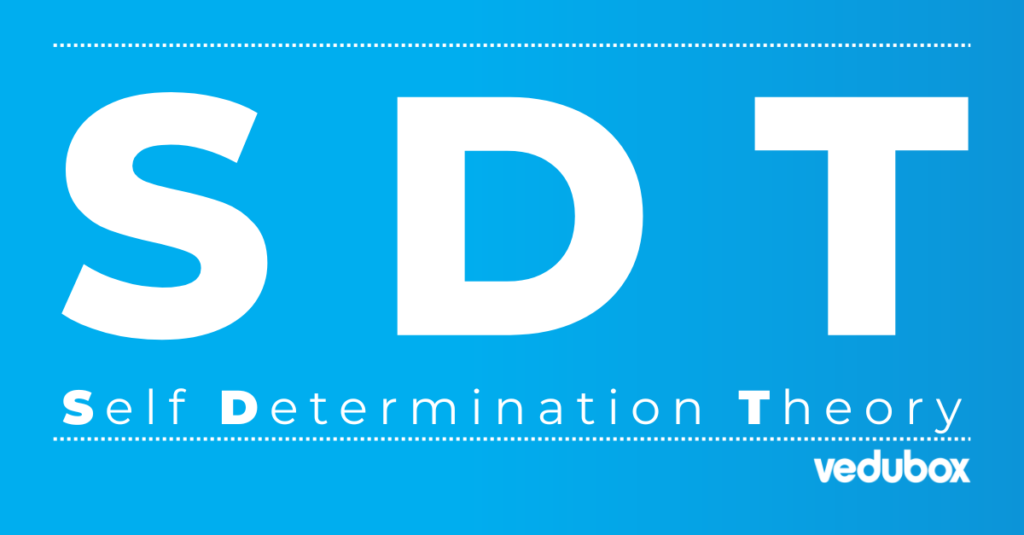
The foundation of effective gamification in work lies in Self-Determination Theory (SDT), which posits that humans are intrinsically motivated when three core psychological needs are met:
- Autonomy: The feeling that “I chose to do this,” rather than being forced. Gamification offers the choice to compete, the choice of when to unlock the next level.
- Mastery: The desire to improve skills and competence. Points and progress bars provide instant, measurable feedback that confirms, “I am getting better at this.”
- Purpose/Relatedness: The need to feel connected to others and that your efforts matter. Leaderboards and shared badges fulfil this need for social status and healthy competition.
Gamification triggers the brain’s chemical reward system with the release of dopamine. Earning a point gives instant gratification that reinforces the desired behavior — in our case, learning. Badges offer social proof, and leaderboards tap into our natural human desire for status and recognition.
Several studies show that employees overwhelmingly prefer gamified experiences, and implementing gamification in an LMS can boost overall engagement, productivity, and motivation.
Curing “Compliance Fatigue”
In fields like finance and healthcare, compliance training is often dreaded. Annual GDPR refreshers and mandatory health and safety courses can feel like a chore. Many employees rush through, clicking and skimming just to reach the end, and often miss key information along the way.
This “tick-box culture” is risky.
The answer is to turn a passive task into something active. Rather than a dull PDF and a routine quiz, gamification lets you shape learning as a series of challenges or quests.
Employees might begin as ‘Trainees,’ collecting points for finishing modules quickly and accurately. Those who pass a scenario-based final exam earn the ‘Data Guardian’ badge. The leaderboard keeps everyone on their toes — nobody wants to see their name at the bottom.
Turning Students into Superfans
For those running education or training businesses, the challenge shifts. Selling courses is about building momentum and a sense of community.
Creating the Cohort Effect
The goal is to turn your students into a group that supports each other, but also spurs each other on.
- Milestones and Levels: You can break a 12-week course into “levels.” Completing a module means unlocking the next level and earning a badge that confirms you’ve got the know-how. This constant sense of progress tackles the mastery need head-on.
- Community Leaderboards: Showing a leaderboard with the top ten most active learners creates a gentle but powerful social pressure. No one wants to fall behind. Students log in each day to keep their spot, and learning becomes part of their routine.
When students are engaged, they finish their courses, feel a sense of achievement, and are much more likely to sign up for the next one. Gamification helps build loyalty and long-term success.
How to Implement
You may assume implementing effective gamification requires hiring expensive software developers to build custom apps. You may be correct. Vedubox, however, changes the narrative.
With Vedubox, gamification is built right into the learning platform. You can turn on and tailor these features instantly, applying them across your whole library of courses.
Key Vedubox Gamification Features
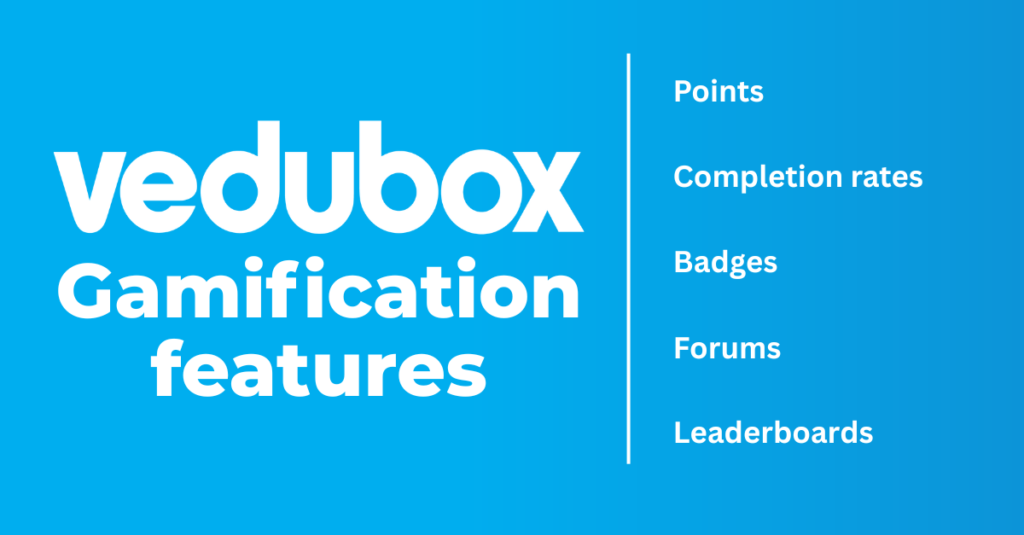
To drive daily engagement, you must reward behavior, not just results. The Vedubox system allows you to effortlessly award points for daily log-ins, forum participation, submitting work, and completing live classes.
The leaderboards module lets users see top performers at a glance. You can show full names or use anonymous handles, keeping things competitive while respecting privacy rules.
When someone completes a course, they get a branded certificate and a digital badge, ready to share on LinkedIn or elsewhere. For companies, it’s free branding; for students, it’s a mark of achievement.
What sets Vedubox apart is how everything works together. Watching a video, taking an exam, or joining a live class — all of it adds to a learner’s score, making the whole experience more connected and engaging.
The Future of Work Is Playful
The shift from mandatory training to motivated learning is essential for solving the engagement gap. Gamification in LMS offers the strategic bridge between “I have to learn” and “I want to learn,” transforming static content into dynamic, rewarding, and measurable experiences.
By tapping into fundamental human needs for mastery and recognition, L&D managers can ensure 99% compliance adherence, while independent tutors can slash drop-off rates and build a loyal customer base.
If you’re ready to move beyond digital filing cabinets and use the science of motivation in your learning strategy, now’s the time. Book a demo to see how you can raise engagement and get real results.