Contents

Imagine a corporate training room just a handful of years ago. Whiteboards are smeared with the ghosts of dry-erase markers, highlighters are being rhythmically capped and uncapped, and employees are physically wrestling with dense, heavy compliance manuals. The air is thick with frustration, but also with focus.
Fast forward to today. The room is quiet. A learner types a prompt into a chat window, an algorithm generates a pristine, bulleted summary in three seconds flat, and the learner nods, satisfied that they have mastered the material.
But have they?
We live in an era where delegating thought is as easy as ordering lunch. It is an astonishing technological leap, but it harbors a chilling reality for educators, instructors, and L&D professionals. The search query “is ai making you stupid” isn’t just a paranoid internet trope. It is a documented, neurological crisis.
The Era of Friction

Before the advent of generative models, educational institutes, training businesses, and corporate L&D departments operated on a fundamental principle of friction. Learning required active engagement. You had to read the text, analyze the data, fail a few times, and manually synthesize your findings. If you were a compliance officer or an instructor, you spent hours evaluating whether a student actually grasped the nuances of aviation safety or healthcare regulations.
That cognitive friction was not a barrier to learning; it was the learning. The struggle built the neural pathways.
Then, the landscape shifted beneath our feet. AI has become an essential technology to adapt to, and we have seamlessly segued into the AI-enabled age. At first glance, this adaptation was nothing short of miraculous. AI facilitated rapid content generation, allowing instructional designers to build entire modules before their morning coffee got cold. It curated vast troves of knowledge and delivered predictive analysis that seemed to magically map the future of corporate training.
The Accumulation of Cognitive Debt
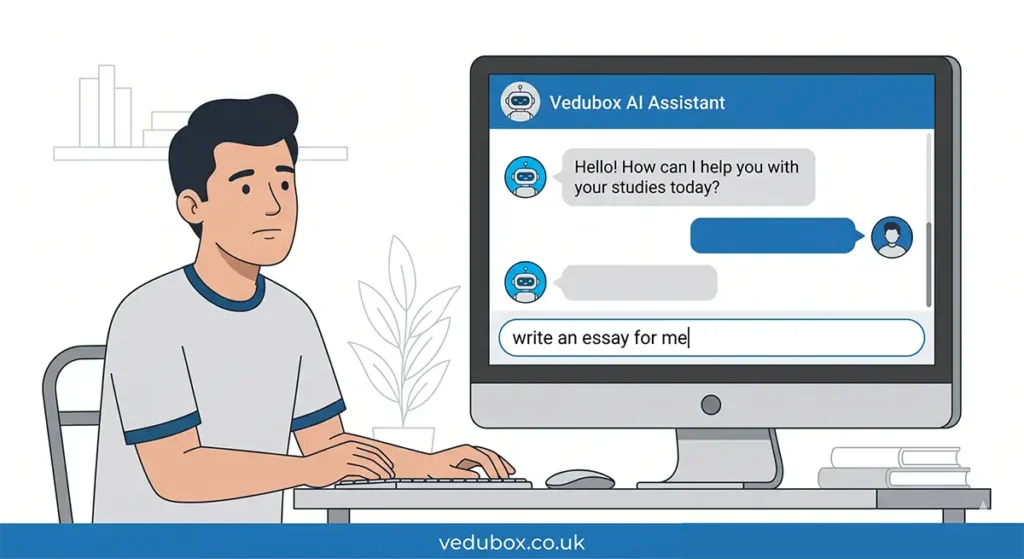
However, convenience came with a heavy toll. We began using these tools not just to assist our processes, but to outsource our thinking entirely.
“Many are now ‘outsourcing’ their thinking to AI platforms, and it is this that leaves us vulnerable,” reports Psychology Today. We traded genuine cognitive effort for algorithmic efficiency.
The cost of this exchange is what researchers are now calling “cognitive offloading,” and recent AI research presents a stark reality about AI and cognition. When we stop wrestling with information, our brains literally quiet down. A landmark study revealed that “brain connectivity was found to systematically decrease with external support levels.”
Worse still, this lack of engagement destroys retention. The same research found that “LLM users showed severe deficits in memory and essay ownership, with 83% being unable to quote from the essays they had just written.” Because nothing screams “I deeply understand this material” quite like having absolutely no memory of writing it, right?
When leading publications ask the question, “Is AI making us stupider? Almost certainly,” the data backs it up. Prolonged exposure is actively changing people’s brains, saddling learners with an insurmountable accumulation of cognitive debt.
Reevaluating the AI Equation
So, do we throw our servers into the ocean and go back to chalkboards? Absolutely not. But we must urgently reevaluate how we integrate AI into our institutions and businesses. The goal is to benefit from AI without eroding our human capital.
As a recent report from the USC Center for Generative AI and Society notes, “The findings indicate a necessity for targeted, GenAI-specific professional development and enhanced institutional support.” We need to shift from hesitant, passive AI consumption to confident, structured integration.
Here is exactly where an All-in-One Collaborative Integrated Learning Platform like Vedubox changes the paradigm. Instead of allowing learners to bypass the cognitive process, Vedubox’s infrastructure is designed to enforce meaningful engagement.
- Automate the Administration, Not the Thinking: Use AI to power Vedubox’s reporting and predictive analytics to identify knowledge gaps, while leaving the critical problem-solving to humans. Our audit-ready compliance tools ensure that learners are actually comprehending the material, maintaining a verifiable trail of their progress.
- Foster Real-Time Human Connection: AI cannot replicate the “aha!” moment of a live debate. By leveraging Vedubox’s integrated webinar features, interactive smartboards, and live video classes, instructors can facilitate unscripted, human-led discussions that require active, on-the-spot reasoning.
- Design for Focus: To help mitigate cognitive overload while learners tackle complex materials, keep your course design clean and readable. We highly recommend utilizing clean typefaces (such as Montserrat or Mulish, for example) to provide a visually soothing environment that keeps the brain focused on the lesson, rather than distracted by the layout.
Ultimately, “employed properly, AI has a place in enhancing learning without diminishing cognitive capability.” The future of education isn’t about letting algorithms do the heavy lifting of human thought. It’s about using platforms like Vedubox to handle the logistics, so your learners can get back to the beautiful, messy, and absolutely necessary friction of learning.

Bring all your training together on one platform.
Manage your training, exams and reporting from a single place with Vedubox.
Request a Demo



.svg)